Back to top arrow

Melbourne Racing Club Administration Building

Commercial

Client

Melbourne Racing Club

Architect

Hassell

Location

Caulfield Racecourse, VIC

Head contractor

Kane Constructions Pty Ltd

Structural engineer

WSP

Building methodology

Hybrid – XLAM CLT,
ASH Masslam, concrete & steel


At the heart of the Caulfield Racecourse transformation, the new Melbourne Racing Club Administration Building demonstrates how XLAM’s mass timber solutions can drive commercial performance, sustainability and architectural quality in equal measure — delivering a contemporary three-level workplace defined by exposed CLT structure, speed of construction and reduced environmental impact.

About the project

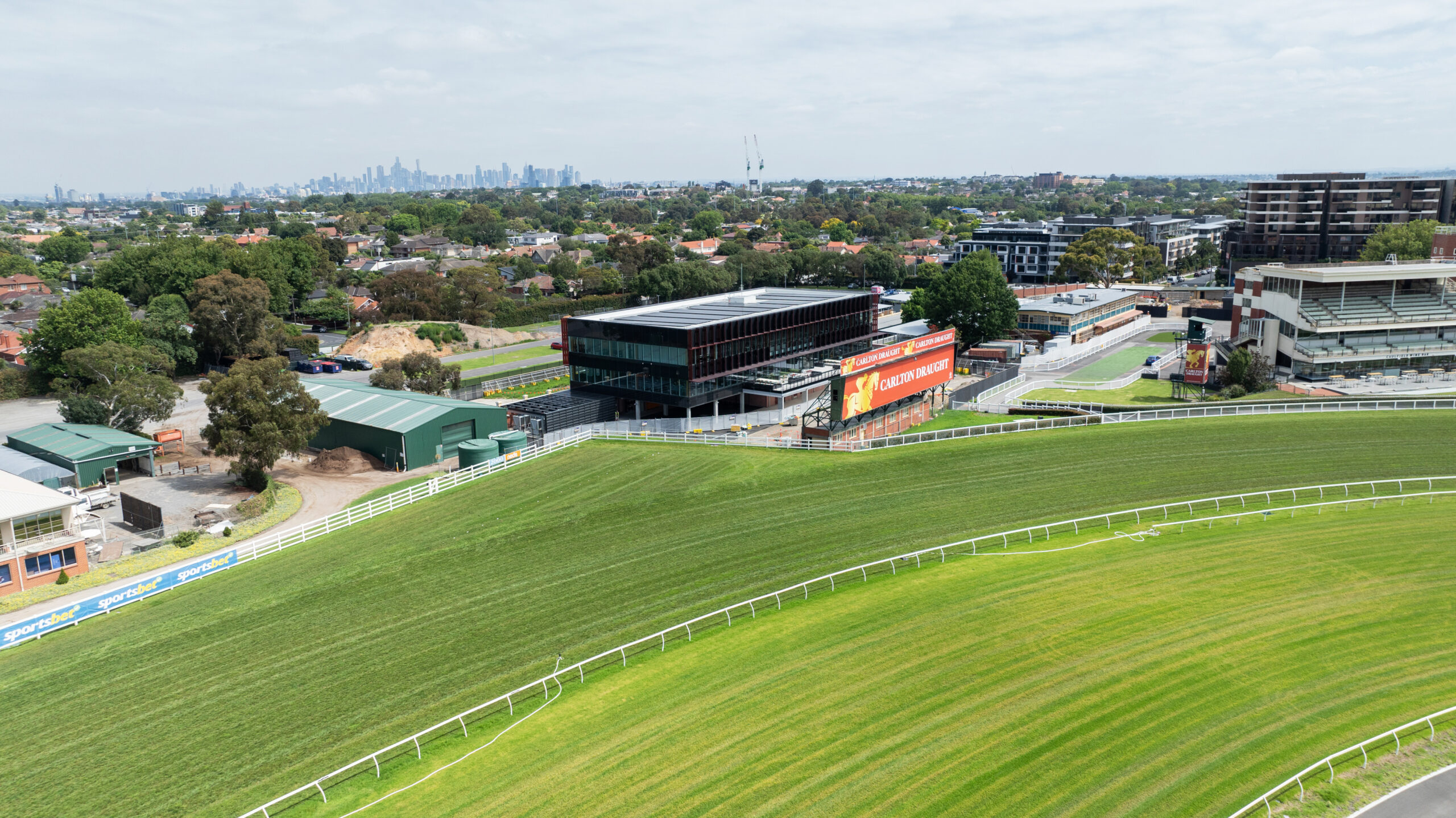
The Melbourne Racing Club (MRC) Administration Building forms part of a broader $79 million transformation of the Caulfield Racecourse campus, including new public spaces, participant facilities and event infrastructure. Designed by Hassell and delivered by Kane Constructions, the 5,500m² timber office anchors the western edge of the precinct and establishes a new benchmark for sustainable commercial development within the racing industry.

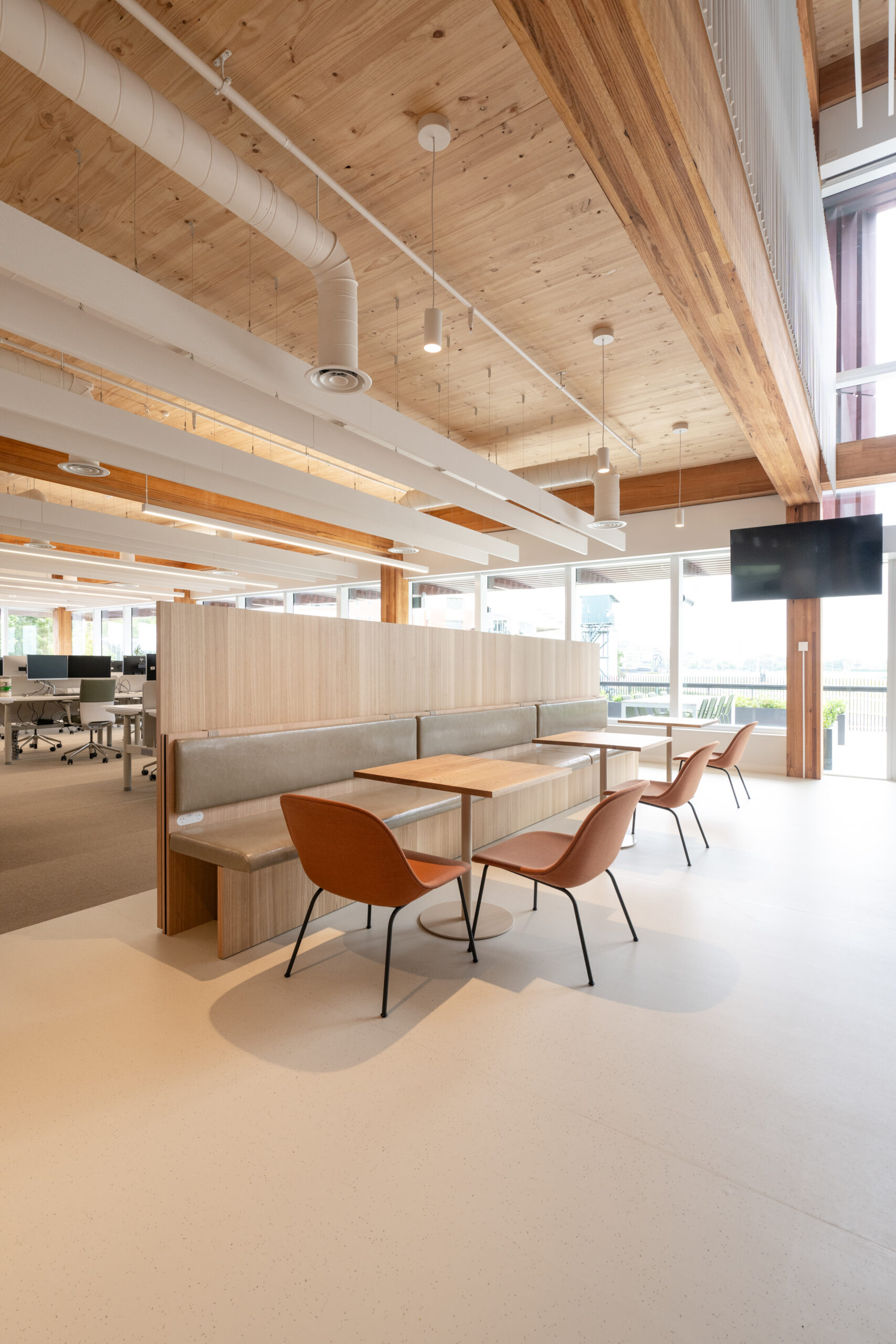
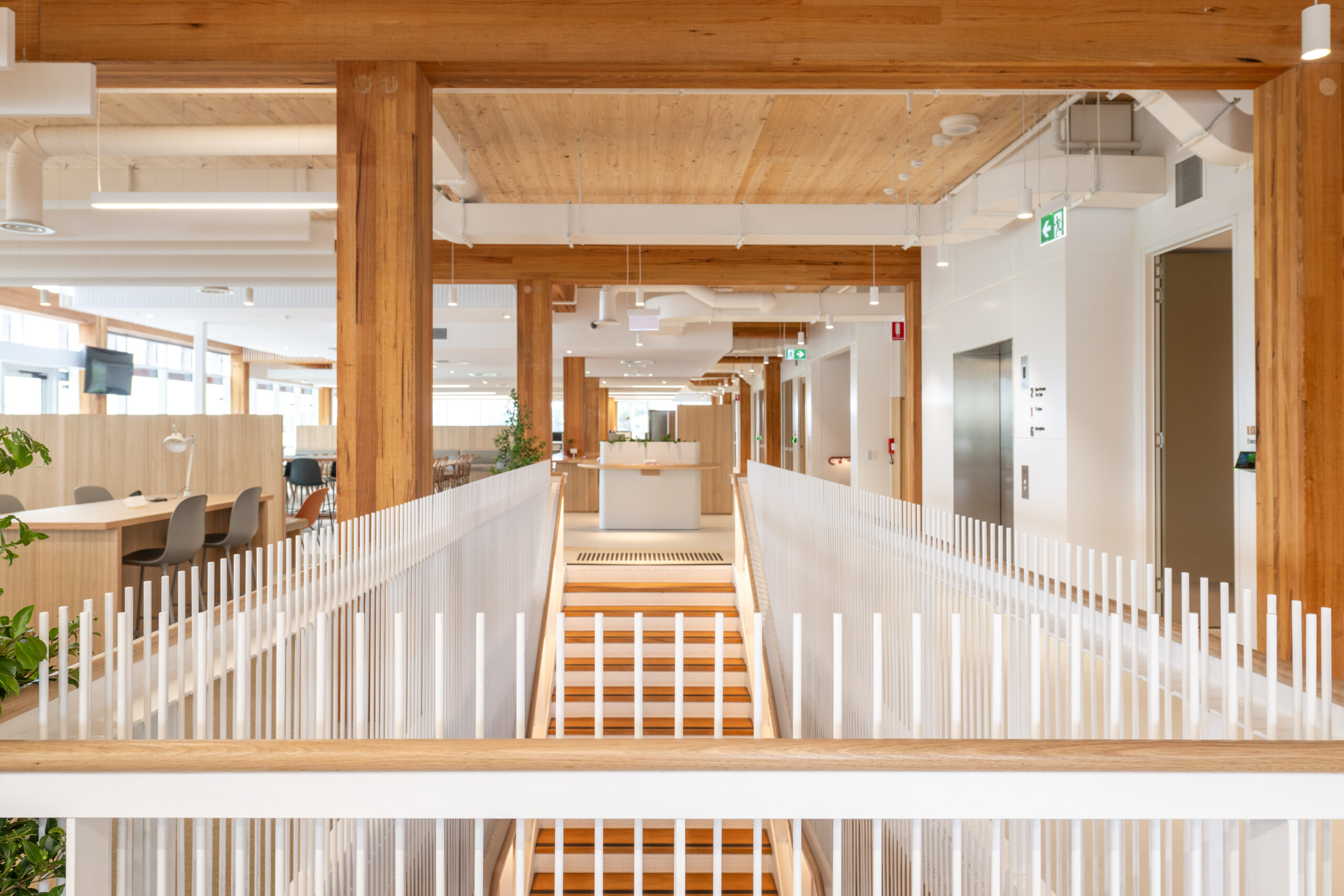
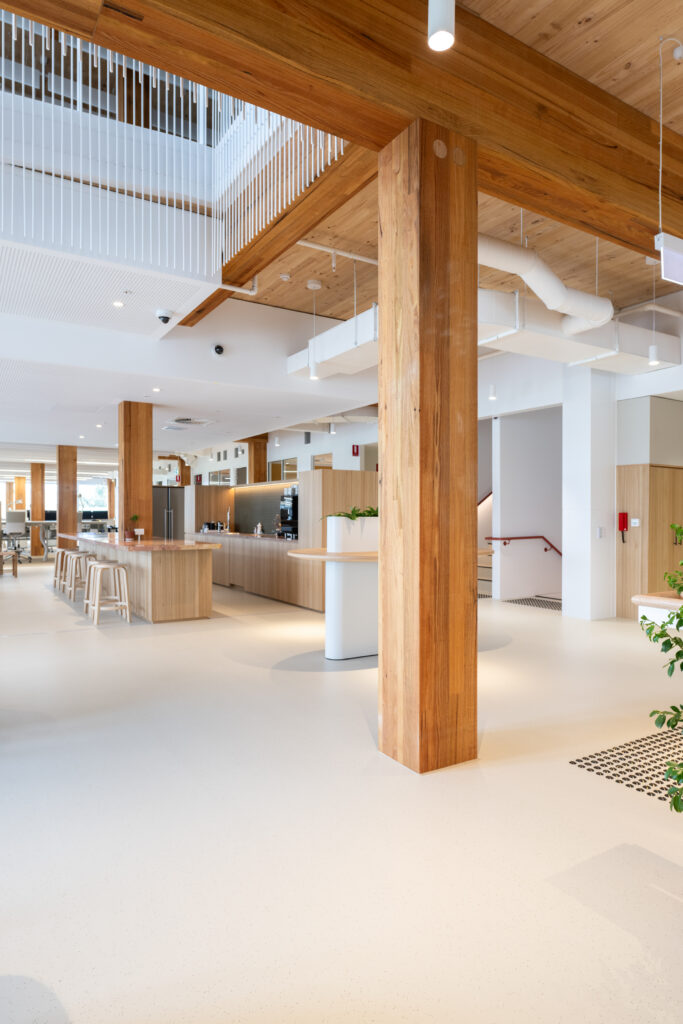
Wrapped in a transparent glass skin and protected by an expressive metal sunshade, the building reveals its timber structure from within. XLAM’s exposed CLT floors and roof panels define the interior, creating a natural, human-centred environment that connects occupants to the material honesty of the building. A central hub encourages collaboration and links each level to an external terrace overlooking the racetrack, reinforcing the building’s connection to place and purpose.

From the outset, the client and design team sought a structure that would reduce embodied carbon, minimise disruption within a live environment and deliver a high-quality workplace. Mass timber offered a clear solution. Its lightweight nature reduced footing requirements and associated concrete volumes, while prefabrication enabled rapid on-site assembly and improved programme certainty.

XLAM worked closely with Kane Constructions, WSP and installer Standstruct to supply the CLT floor and roof panels that form the primary diaphragms of the building. Through early coordination and a Design for Manufacture and Assembly (DfMA) approach, XLAM ensured that structure and performance were resolved in the factory — reducing site risk, eliminating many wet trades and temporary works, and enabling a fast, efficient and highly predictable installation programme.

Design and structure

The building employs a post-and-beam mass timber system, combining XLAM CLT with glulam columns and beams. The CLT panels form both the structural floor plates and the exposed soffits, providing strength and a finished architectural surface in a single element. This integration is central to the efficiency of the system.

Supporting the CLT floors are Masslam glulam beams and columns manufactured from Australian Oak supplied by ASH, with concrete elements used selectively at the base to integrate the building with the wider precinct. Rothoblaas fixings and connectors were used throughout, reflecting the precision and coordination inherent in engineered timber construction.

Key project quantities include:

  • 449.5m³ of XLAM CLT
  • 83 individual CLT panels
  • 94 Masslam beams and 52 Masslam columns
  • 19,235 screws and connections

Every CLT panel was manufactured to millimetre accuracy, arriving on site ready for immediate installation. This removed the need for formwork, excessive propping and curing time, allowing trades to follow closely behind the structure and significantly compressing the overall programme.

Original Image

Outcome

The entire timber structure was installed in just two months—an outcome made possible by XLAM’s prefabricated CLT system and the project team’s collaborative approach. The speed and certainty of installation reduced on-site disruption within the active racecourse environment and lowered overall construction risk.

Beyond programme benefits, the use of CLT delivered tangible environmental and experiential outcomes. The building achieves a substantially lower embodied carbon footprint than a comparable steel or concrete structure, while the exposed timber interiors create a calm, welcoming workplace that supports wellbeing and productivity.

The Melbourne Racing Club Administration Building demonstrates how XLAM’s CLT can operate as both structure and architecture—streamlining construction, elevating design quality and delivering meaningful sustainability outcomes. It stands as a clear example of how mass timber can lead the next generation of commercial buildings: faster to build, lighter on the planet, and richer in experience.

449.5m3

XLAM CLT

322 tonnes

CO2 sequestered

=162 cars

Taken off the road for a year

75 mins

For Australian plantations to regrow the timber used in construction

1,000+ projects completed across sectors including

commercial.

industrial.

institutional.

residential.